
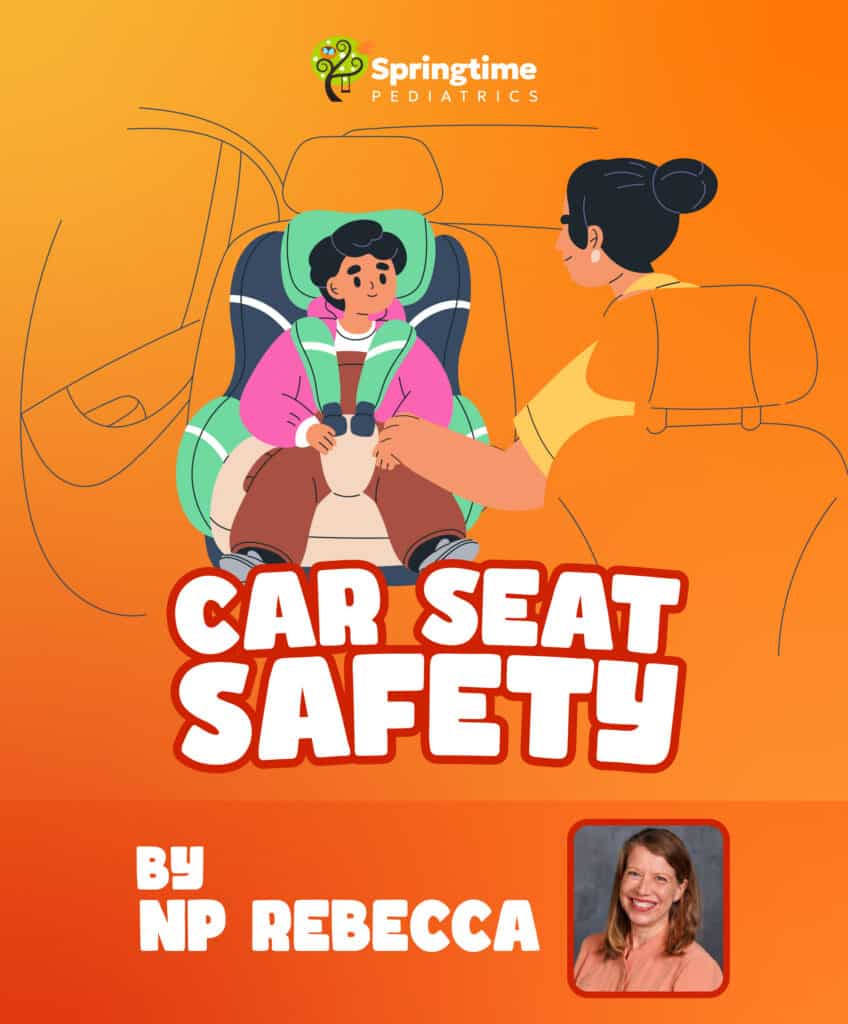
If you’ve ever stood in the car seat aisle (or scrolled reviews at midnight) wondering whether it’s finally time to switch stages, you’re in good company. With so many seat types and rules, it’s easy to feel unsure. Here’s a simple, down-to-earth guide to help you feel confident about what’s right for your child, at every age and stage.
The Right Seat for Every Stage
● Birth to 2 years: Rear-facing is safest. Keep your child rear-facing for as long as their seat allows. Many kids are safest staying this way past their second birthday.
● Ages 2 to 4: Once your child outgrows the rear-facing limits, it’s time for a forward-facing seat with a 5-point harness. The longer they stay harnessed, the better.
● Ages 4 to 8: In Texas, kids need a car seat or booster until age 8 or 4’9″ tall, whichever comes first. Booster time comes once they’ve outgrown their harnessed seat.
● Ages 8 to 12: Ready for a seat belt alone? Run the 5-question fit test: back flat, shoulder belt centered, lap belt low on the hips, knees bent comfortably, feet flat. A ‘no’ to any of these means it’s booster time a little longer.
Quick Answers to the Questions We Hear Most
Are toys on the car seat handle safe? It’s best to skip aftermarket toys and accessories. In a crash, they can become projectiles. Some infant seats also need the handle in a specific position while driving, so it’s worth double-checking your manual.
Bulky coats in cold weather? Buckle your child in snugly first, then add a blanket over the harness instead of underneath it.
How snug should the harness be? Make sure the chest clip sits at armpit level, then try the pinch test at the shoulder. If you can’t pinch any extra webbing, you’ve got it just right.
Infant seat or convertible seat, which is safer? Both are great, safe choices when used correctly. What matters most is that your child fits within the seat’s height and weight limits, it’s installed correctly, and they’re buckled in every single ride.
My baby cries every car ride, could it be motion sickness? True motion sickness is uncommon before age 2. Many babies just need time adjusting. Try soothing music, a baby-safe mirror so they can see you, or having another adult ride in the back seat. Short trips that gradually get longer also help.
My toddler figured out how to unbuckle themselves, now what? First, check that the harness is snug, since a loose harness makes unbuckling easier. From there, praise them for staying buckled, keep rides short at first, and stay consistent. It’s a car safety rule with no exceptions, every time.
When in doubt, keep your child in their current stage a little longer rather than rushing to the next one. And if you’re ever unsure whether your car seat is installed correctly, it’s worth having it checked by a certified child passenger safety technician. Many local fire departments offer free car seat safety checks.
We’re here for your family well beyond the exam room. Find us Monday through Wednesday until 7:30 PM, Thursday and Friday until 5 PM, and Saturdays from 9 AM to 4 PM. And even after we close, our after-hours line connects you straight to one of our doctors.
Have questions about your child’s car seat stage? Give us a call at (832) 844-1470 or stop by 1430 W. Grand Pkwy S, Katy, TX 77494. We’d love to help you feel confident on every ride.
Written by NP Rebecca