
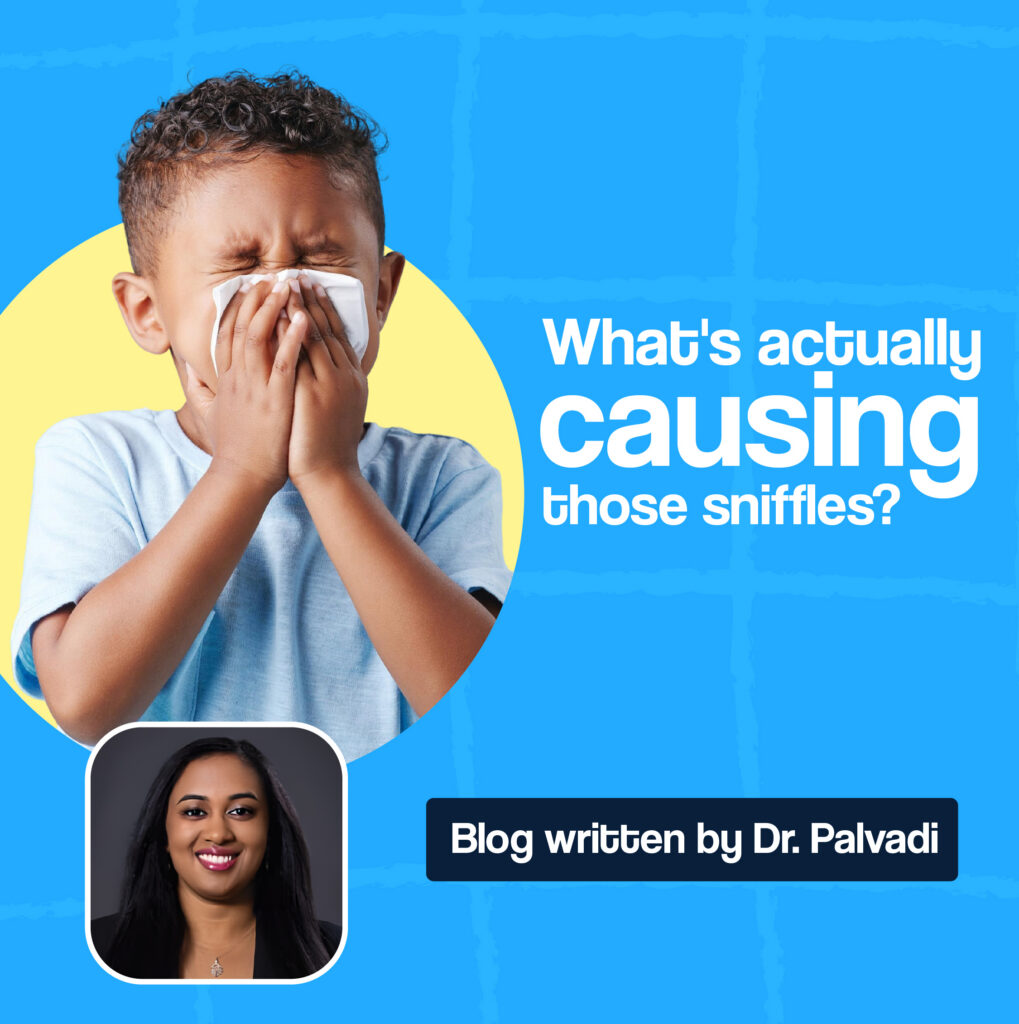
Seasonal allergies happen when your child’s immune system gets a little too protective. It starts overreacting to harmless things in the air—mostly pollen and mold spores. The body treats these tiny particles like “invaders,” which triggers inflammation in the nose, eyes, and throat. That is where all that itching, sneezing, and watery eyes come from!.
Is it a Cold or Allergies?
It can be tricky to tell them apart, but here are a few clues that it’s likely allergies:
- The Calendar: Symptoms tend to pop up around the same time every single year.
- The Fever Factor: Allergies bring sneezing and runny noses, but they don’t bring a fever.
- The Timeline: A typical cold usually clears up in 7 to 10 days, but allergies can linger for weeks at a time.
Simple Ways to Help at Home (No Medicine Required!)
You can actually do a lot to lower your child’s exposure to those “invaders” without even opening a bottle of medicine:
- Watch the Clock: Try to limit outdoor play on high-pollen days, especially in the morning when pollen counts are usually at their peak.
- The Post-Play Rinse: Pollen loves to cling to hair and skin. A quick shower and a change of clothes after playing outside can make a huge difference.
- Saline Rinses: Using a simple saline (saltwater) nasal rinse is one of the most effective ways to wash out pollen and mucus.
- Bedroom Basics: Keep the sleeping area a “pollen-free zone.” Wash bedding weekly in hot water, use HEPA air filters, and make sure your child showers before jumping into bed so they don’t bring the outside in with them.
Understanding Your Medication Options
When it comes to allergies, being proactive is key! It is much easier to prevent symptoms from starting than it is to stop them once they are in full swing.
- Oral Antihistamines: Non-drowsy options like Claritin, Zyrtec, or Allegra are generally the first step. We prefer these over older options like Benadryl, which can cause sleepiness and don’t last as long.
- Nasal Sprays: Corticosteroid sprays (like Flonase) are often the most effective for moderate to severe congestion. They work best when used daily. Pro-tip: Point the tip toward the middle of the eye (in a V-shape) for the best results!.
- Eye Drops: If your little one only has itchy, watery eyes, specific antihistamine drops can be used on their own or alongside other meds.
When to Call the Pediatrician

Most allergies can be managed at home with rest and the right routine. However, we want to see your child if:
- Over-the-counter meds aren’t helping after two weeks.
- Symptoms are affecting their sleep or schoolwork.
- Your child has frequent ear or sinus infections.
- They also have asthma, as controlling allergies is a huge part of managing asthma care.
- You aren’t 100% sure if it’s allergies or something else, like enlarged adenoids.
Ready to get your child back to feeling their best?
Our team is here to help you identify specific triggers and find a plan that works for your family.
Blog written by Dr. Palvadi
Book your appointment today!